
Best Python Gui For Mac
What are the best Python GUI frameworks/toolkits? Options Considered. Kv design language is designed to work well with scalable graphical user interfaces (GUIs) as one of its primary focuses. It also segregates the logic from the design elements, making them easier to visually distinguish from. Netbeans has a beta Python plugin that is a little rough around the edges, but could turn into something really cool. Additionally there is a long list of programming centric text editors for the mac, that may or may not fit your needs. Textmate - costs money, people love this program, but I haven't used it enough to see what all the fuss is about.
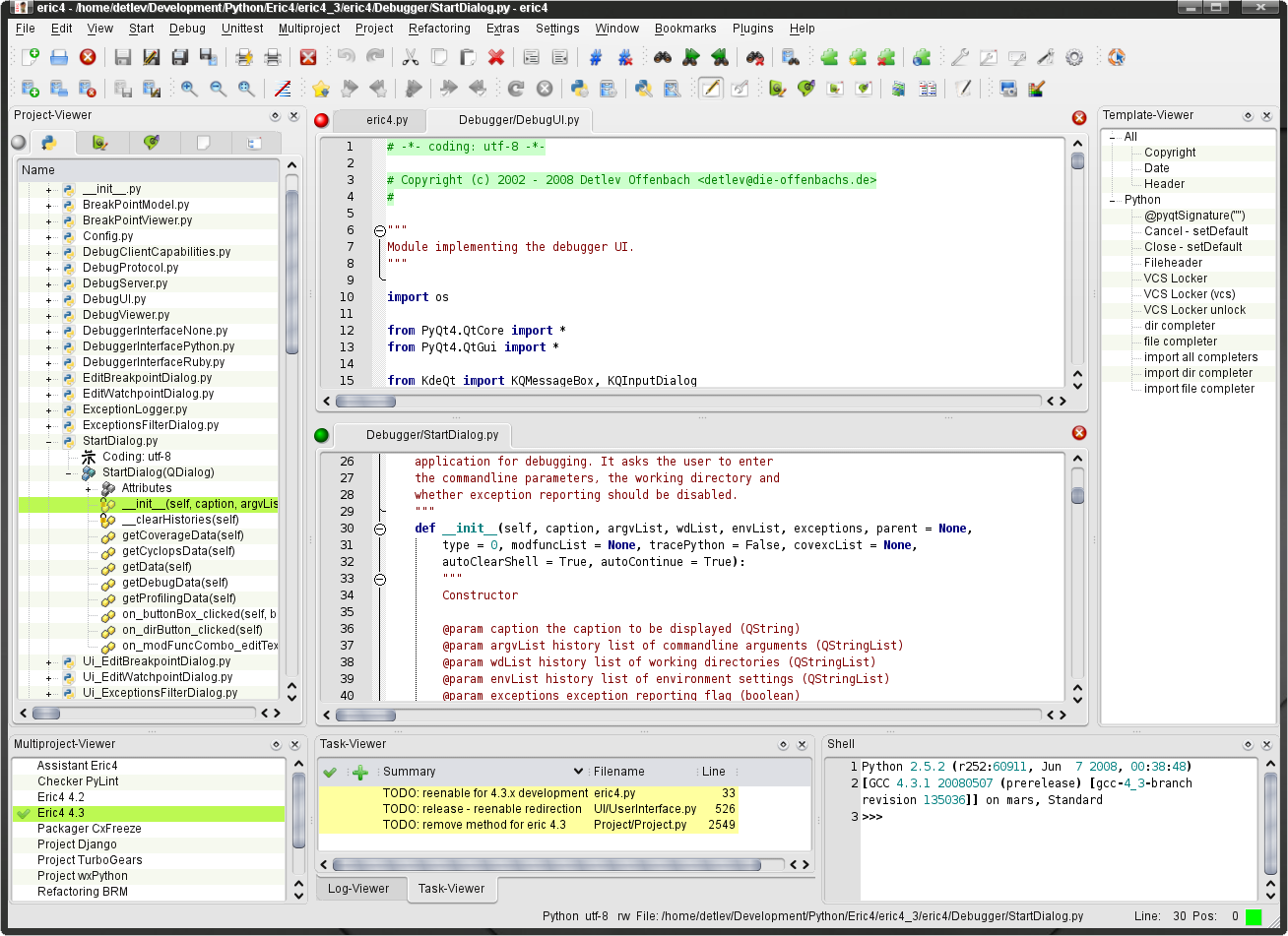
This PyQt5 tutorial shows how to use Python 3 and Qt to create a GUI on Windows, Mac or Linux. It even covers creating an installer for your app. What is PyQt5? Is a library that lets you use the from Python. Qt itself is written in C++. By using it from Python, you can build applications much more quickly while not sacrificing much of the speed of C++.
PyQt5 refers to the most recent version 5 of Qt. You may still find the occasional mention of (Py)Qt4 on the web, but it is old and no longer supported. An interesting new competitor to PyQt is.
Its API is virtually identical. Unlike PyQt, it is licensed under the LGPL and can thus be used for free in commercial projects.  It's backed by the Qt company, and thus likely the future.
There is only one file in the Updates folder and that is '16.0.6568.2025'. Where do I go from here? I have deleted over several thousand duplicated email since last week after I updated my outlook. Duplicate email remover outlook 2016 for mac free. Please keep me in the loop if there is a solutions. I get the same email every few minutes and the outlook just keep on downloading the same emails or any email that is still on my server.
We use PyQt here because it is more mature. Since the APIs are so similar, you can easily switch your apps to Qt for Python later. Install PyQt The best way to manage dependencies in Python is via a.
A virtual environment is simply a local directory that contains the libraries for a specific project. This is unlike a system-wide installation of those libraries, which would affect all of your other projects as well. To create a virtual environment in the current directory, execute the following command: python3 -m venv venv This creates the venv/ folder. To activate the virtual environment on Windows, run: call venv/scripts/activate.bat On Mac and Linux, use: source venv/bin/activate You can see that the virtual environment is active by the (venv) prefix in your shell. First, we tell Python to load PyQt via the import statement: from PyQt5.QtWidgets import QApplication, QLabel Next, we create a with the command: app = QApplication([]) This is a requirement of Qt: Every GUI app must have exactly one instance of QApplication. Many parts of Qt don't work until you have executed the above line. You will therefore need it in virtually every (Py)Qt app you write.
The brackets [] in the above line represent the command line arguments passed to the application. Because our app doesn't use any parameters, we leave the brackets empty.
Now, to actually see something, we create a simple label: label = QLabel('Hello World!' ) Then, we tell Qt to show the label on the screen: label.show() Depending on your operating system, this already opens a tiny little window. The last step is to hand control over to Qt and ask it to 'run the application until the user closes it'. This is done via the command: app.exec_() If all this worked as expected then well done! You've just built your first GUI app with Python and Qt. Widgets Everything you see in a (Py)Qt app is a: Buttons, labels, windows, dialogs, progress bars etc.