Excel For Mac Add Total Row
I was running 14.5.4, so updated it as suggested. No help--I still have the same issue. That is, I can add data rows below the table, but they don't get added to the table itself. By the way, I have tried to get it to work on my other computer as well (the same old excel list was on both), and it doesn't work there either. I have some other lists, and on at least some of them I do not have the problem.
That is, I converted them to tables, and adding data works just find. The list in question is not huge, but it would be a pain to have to enter the data over again. Thanks Jerry. Yes, I know about inserting rows--but as in your example, when I am at the bottom of the table I cannot add rows below. What I can do is insert rows above the last row that is recognized as part of the table. I can then use those rows as part of the table, and will keep a dummy row at the bottom.
But that means I either have to be satisifed with inserting only one row at a time, or end up with my rows out of order. Neither problem is critical, but I still would like to know why Excel doesn't recognize additional rows below as part of the table.
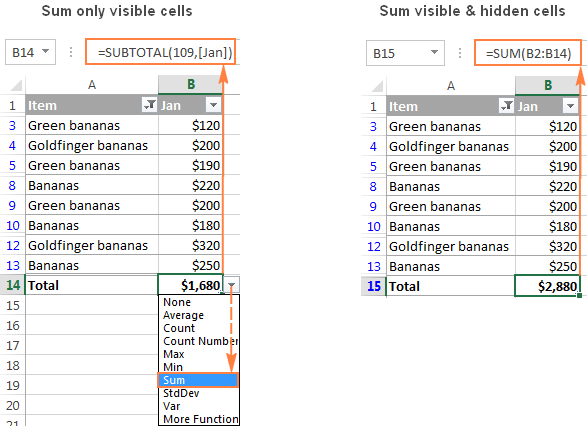
In actual, we can’t add subtotal rows in a table automatically. However, we can convert the table to a normal range, and then apply the Subtotal feature to add subtotal rows in the range automatically. Select the table, right click, and click Table > Convert to Range in the context menu. See screenshot: Note: The Microsoft Excel dialog box will comes out and asks for your reconfirmation. Please click the Yes button to go ahead. Select the specified column you will add subtotals based on, click Data > Sort A to Z, and then click the Sort button in the popping out Sort Warning dialog box.
Well, averages and standard deviations aren't 'totals' per se, so you cannot have total rows for these. Mail app for mac sierra not sending emails. Assuming the table is not just a data range, but a true Excel 2007+ table: Insert new rows for average and standard deviation below the totals row, leaving at least one empty row in between.
See screenshot: 3. Select the table range, and click Data > Subtotal. See screenshot: 4.
In the Subtotal dialog box, please (1) select the specified column you will add subtotals based on from the At each change in drop-down list; (2) specify the calculation type from the Use function drop-down list; (3) check columns you will add subtotal to in the Add subtotal to box; and finally (4) click the OK button. See screenshot: Now you can see the subtotal rows are added based on the specified column in the selected range. See screenshot: Related articles. Increase your productivity in 5 minutes.
Don't need any special skills, save two hours every day! 300 New Features for Excel, Make Excel Much Easy and Powerful: • Merge Cell/Rows/Columns without Losing Data. • Combine and Consolidate Multiple Sheets and Workbooks. • Compare Ranges, Copy Multiple Ranges, Convert Text to Date, Unit and Currency Conversion. • Count by Colors, Paging Subtotals, Advanced Sort and Super Filter, • More Select/Insert/Delete/Text/Format/Link/Comment/Workbooks/Worksheets Tools.